

Did you know that even a minor mistake during an interior fit-out modification in Dubai could result in fines exceeding AED 3,000, or even completely halt your project?
In Dubai’s highly regulated construction environment, interior modifications are closely tied to a building’s core infrastructure, which makes getting DEWA approval interior modification and compliance with the Dubai Building Code and MEP regulations essential to ensure: ✔️safety ✔️uninterrupted operations.
In this article by DAEM Contracting, we explain the most common interior modifications that require DEWA approval, along with the potential consequences of starting renovation works before securing the necessary approvals.
Contact Us Now!
Your Project, Our Priority: Fast & Reliable Approvals
Table of Contents
DEWA Approval Interior Modification:Which Interior Changes trigger it?
Interior modifications that require DEWA modification approval Dubai before work begins typically include increasing the property’s electrical load (such as installing a cooling unit), relocating or adding electrical distribution boards, as well as MEP modifications and commercial fit-outs involving water supply extensions.
In many cases, DEWA does not rely solely on the type of modification, but also assesses its impact on energy consumption and the safety of the building’s electrical and mechanical systems (such as DCD Fit-out Approval Requirements in Dubai).
As a result, even relatively minor modifications (such as adding new water outlets within the property) may still require official approval before execution.
here is a list explain when does interior modification need DEWA:
- Upgrading electrical loads.
- Adding or relocating distribution boards.
- MEP alterations.
- Commercial Fit-outs.
1- Upgrading Electrical load
Increasing or altering electrical loads as part of interior modifications within a property (such as installing additional water heaters) requires DEWA approval when they increase electricity consumption beyond the property’s approved electrical capacity (measured in kilowatts), in order to maintain the safety of the electrical network and prevent the network from being overloaded beyond its operating capacity.
Because this process is directly related to assessing the nature of the ongoing works, it highlights the importance of Interior vs Structural Modification Approval in determining the permitted scope of modifications.
Applying for DEWA approval becomes mandatory when the modification involves any of the following:
- Adding high energy-consuming equipment (such as additional AC units or large water heaters).
- Installing heavy equipment or new systems that increase the electrical load.
- Modifying electrical panels or breakers in a way that changes the total electrical capacity.
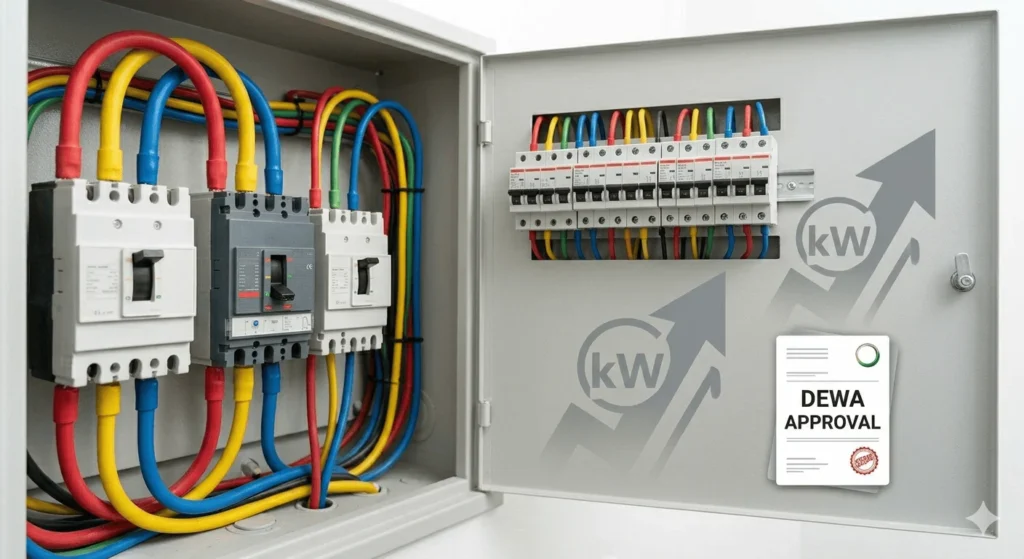
Furthermore, no modification works or new electrical systems can be carried out unless DEWA approves the electrical loads through a DEWA-approved contractor or consultant.
These procedures ensure that the proposed electrical loads comply with the approved electrical load capacity of the property and the approved electrical protection systems, thereby reducing risks such as:
- Power outages caused by electrical overload.
- Damage to electrical appliances.
- Electrical fire risks.
💡 Refer to the main reasons why modification approvals are rejected to ensure interior drawings and modifications comply with DEWA approval requirements and the Dubai Building Code from the first submission, avoiding delays or resubmission cycles.
2- Adding or relocating distribution boards
Relocating or adding electrical distribution boards is among the interior modifications that most frequently require direct approval from Dubai Electricity and Water Authority (DEWA), due to its direct impact on:
- Electrical load distribution.
- Power supply routes.
- Electrical protection systems.
When the modification involves:
✔️ relocating the main or sub distribution board
✔️ adding new electrical circuits
✔️ or modifying breaker ratings or cable capacities
➡️it becomes necessary to reassess the entire electrical system to ensure it can safely handle the connected loads without causing overheating or placing additional strain on the building’s low-voltage network.
DEWA also requires inspection of earthing systems and earth leakage protection breakers, while ensuring proper cable sizing and phase balancing in accordance with its official regulations governing electrical installations and the Dubai Building Code, in line with DDA Approval on Building Modification.
3- MEP Alterations
MEP modifications are among the most impactful interior modifications on a building’s core infrastructure.
For this reason, they are typically subject to regulatory reviews and approvals involving Dubai Electricity and Water Authority (DEWA), alongside other licensing authorities such as Dubai Municipality.
This highlights the importance of understanding What Is the Difference Between DDA Approval and DM Approval to accurately identify the responsible authority and avoid overlapping procedures during the approval process.

In general, modifications that typically require MEP modification DEWA approval include:
✔️ Relocating or upgrading MDB / SMDB distribution boards.
✔️ Adding power supply points for high-consumption equipment such as jacuzzi systems.
✔️ Modifying water supply and drainage networks.
✔️ Upgrading AC systems or modifying ventilation systems.
✔️ Creating new wet areas such as kitchens and bathrooms.
✔️ Converting to central systems and chilled water systems.
DEWA also requires the submission of updated engineering drawings and accurate electrical load calculations through an approved consultant or contractor, along with an official modification application including details of the modified mechanical, electrical, and plumbing systems.
Therefore, review DCD-Compliant Design Tips Interior Designers Often Miss to avoid application errors.
4- Commercial Fit-Outs
Commercial fit-out works in Dubai (such as lighting layout modifications) require official approval from DEWA (such as Clinic Fit-out Approval in Dubai) when the modifications affect:
✔️ MEP system infrastructure.
✔️ Electrical load changes.
✔️ Water networks, meter locations, or service connections within the facility.
This includes the fit-out of ✔️ retail shops ✔️ offices ✔️ restaurants ✔️ clinics and other commercial spaces converted from Shell & Core condition or reconfigured and fitted out for different operational uses, in order to ensure compliance with the Dubai Building Code and pass site inspections before electricity or water services are activated.
Accordingly, DEWA approval for fit-out works becomes mandatory alongside Interior Fitout Approvals when the modifications involve:
✔️ Adding or modifying electrical panels.
✔️ Modifying electrical loads or installing commercial equipment.
✔️ Creating wet areas inside shops or offices.
✔️ Modifying meters or utility connections.
💡 Before starting any interior renovation that impacts electrical, plumbing, or HVAC systems, consult a DEWA-approved contractor such as DAEM Contracting to:
✔️ Assess your modification scope.
✔️ Confirm whether DEWA approval is required.
✔️ Ensure compliance before work begins.
What Happens If You Start Interior Modifications Without DEWA Approval
When you carry out any interior modification work within your property (whether electrical, water, or drainage-related) without obtaining approval from DEWA, it is considered a violation that may result in the following penalties:
❌ Immediate suspension of all construction and renovation work.
❌ Complete disconnection of electricity and water services.
In many cases, the violation may not only be identified during execution but may also surface later and lead to delays in Why Your DDA Approval Gets Delayed when:
🔷 Utility reconnection applications.
🔷 Requesting a completion certificate or selling the property.
🔷 Routine inspections by regulatory authorities (such as DDA) or building management.
🔷 Unplanned modifications requiring a Change-Of-Use Permit in Interior Design in Dubai to avoid penalties.
The main penalties and actions you may face when carrying out interior modifications without DEWA approval include:
- Immediate suspension of works: Regulatory authorities (such as the Dubai Land Department) or developers such as Emaar and Nakheel may issue direct orders to stop all ongoing works and prevent access to the site until the violation is resolved.
- Substantial financial penalties: DEWA and relevant authorities (such as Dubai Municipality) may impose fines typically starting from AED 3,000 and exceeding AED 10,000 (800–2700 USD), depending on the type of violation.
- Disconnection of electricity and water services: Utility services may be suspended until the legal status is corrected, while the property owner may also be required to pay reinspection and reconnection fees before services are restored.
- Mandatory removal and reinstatement of non-compliant works: The owner or tenant may be required to remove finishes or dismantle parts of the interior décor to expose concealed connections, in addition to demolishing any works that violate the Dubai Building Code and restoring the property to its original condition at their own expense.
- Insurance policy invalidation and legal liability: If unapproved modifications are carried out, the property insurance policy may become void, meaning the owner assumes full legal and financial responsibility for any fire, electrical short circuit, or water leakage resulting from unauthorized modifications.
- Suspension of property-related transactions: The property may not be sold, leased, or processed for related transactions (such as property record updates) until all violations are settled and the required approvals are obtained through an approved contractor.
Plan Properly to Avoid Any Fines or Delays
Obtaining DEWA approval for interior modifications is not just a regulatory requirement to avoid violations, it is a critical step to safeguard the integrity of the property’s electrical and mechanical systems and ensure the project proceeds without delays or unforeseen costs.
Therefore, reviewing engineering drawings and confirming DEWA approval requirements through an approved contractor or consultant such as DAEM before commencing work helps you to:
✔️ Avoid penalties.
✔️ Expedite the approval process.
✔️ Ensure renovation works are completed as quickly as possible.
Frequently Asked Questions:
1- Does moving a partition wall need DEWA approval?
Yes, Moving a partition wall generally requires approval, especially if it contains MEP elements. If the wall houses electrical wiring, switches, plumbing, or AC ducts, you must obtain a DEWA approval or relevant authority NOCs before proceeding.
2- Which interior changes require DEWA sign-off?
DEWA sign-off is required for any interior renovation that modifies electrical systems, plumbing, or major HVAC/AC setups. Specifically, any internal changes that impact your property’s utility loads or the primary distribution board strictly demand formal Dubai Electricity and Water Authority (DEWA) approval.
3- What are the procedures following submission of a DEWA approval application for interior modifications?
After submitting a DEWA approval application for interior modifications, the following steps are typically carried out:
- Calculation of the revised electrical loads.
- Updating the electrical drawings.
- Conducting a site inspection prior to electricity reconnection.
Comments are closed